
Quick answer
Affiliate marketing is a performance-based business model in which a partner recommends a product or service and receives a commission for a predefined result, most commonly an approved sale or lead. The partner does not earn money merely for writing an article. Revenue arises only when the content helps the right person make a decision, the merchant attributes the conversion to the partner and the program approves it after review.
This guide is for someone who wants to understand affiliate marketing as a business model, not as an internet trick. You do not need your own warehouse or the merchant's customer support operation, but you do need a topic, an audience, trustworthy content, distribution and measurement discipline. An affiliate project can be built on a blog, a specialist publication, a YouTube channel, a social network, a newsletter or within an existing community. The platform is secondary. What matters is whether the partner can reduce customer uncertainty better than a generic product description.
The original version of this article was published in 2024 and remained on the first page of search results for two years. This update therefore does not change the topic or the core search intent. It preserves the answer for beginners, but removes promises that cannot be responsibly guaranteed and adds current rules, realistic project economics, review quality, transparency, attribution, measurement and work with AI-mediated search.
1. What affiliate marketing is and who participates in it
Affiliate marketing is a performance-based compensation arrangement. A merchant distributes a product, service or offer through external partners. The partner creates content or another form of recommendation and receives a unique link, code or identifier. When a user completes the agreed action, the system attempts to attribute the result to a specific partner. A commission does not arise automatically from a click. It arises under the program's rules, often only after the return period, cancellation period or lead quality review has ended.
At least four parties participate in the model. The advertiser or merchant owns the product and pays the commission. The publisher or affiliate partner owns the audience, content or distribution channel. The affiliate network or technical platform provides tracking, reporting, materials and settlement. The customer looks for a solution and decides whether to trust the recommendation. If an agency, influencer manager, sub-affiliate or comparison service enters the relationship, both the economics and the responsibilities become more complex, but the basic principle remains the same.
Affiliate marketing is attractive to merchants because it transfers part of the marketing risk to the partner. Merchants generally do not pay simply because an article was viewed. It is attractive to partners because they do not have to develop their own product. The cost of this advantage is dependence on another party's terms, prices, availability, attribution model and program decisions. A partner therefore does not build traffic alone. The partner builds an asset that must continue to work after a campaign, commission or merchant changes.
| Term | What it means | Practical consequence |
|---|---|---|
| Advertiser | A company or brand that offers the program. | Sets the commission, terms, tracking, approval process and permitted forms of promotion. |
| Publisher | A partner who brings traffic or conversions. | Bears the costs of content, distribution and trust building. |
| Affiliate network | An intermediary between advertisers and publishers. | Simplifies registration, reporting and payouts across multiple campaigns. |
| Conversion | An agreed result, such as a purchase, lead or activation. | It must be measured, attributed and approved correctly. |
| Attribution | The rule that determines who receives credit for the result. | Determines whether the partner receives commission during a longer or multi-touch journey. |
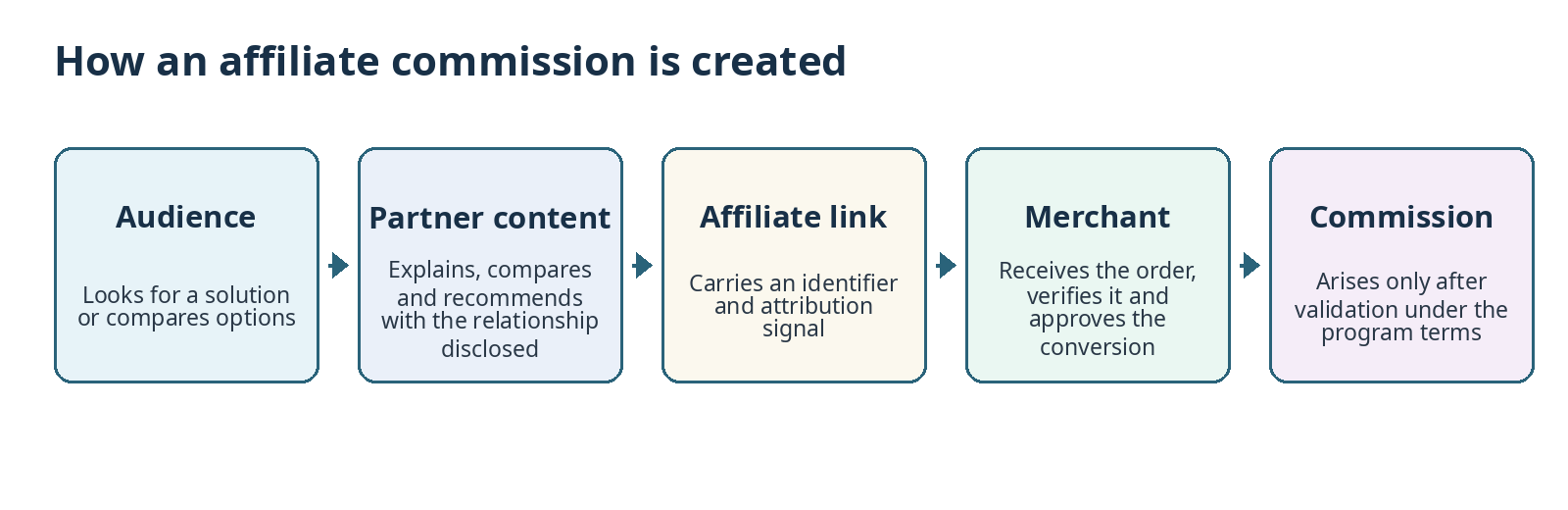
Figure 1: An affiliate commission is the result of the entire chain, not of the click alone.
2. How affiliate marketing works from click to payout
A beginner usually sees only the link and the commission. Several steps between them determine the outcome. The partner first applies to the program and may need to be approved. The partner then creates a tracked link, places it in the content and discloses the commercial relationship. The user clicks, the technology records an identifier, and the merchant or network monitors whether a conversion occurs. The order may appear as pending and later become approved, rejected or cancelled. Only approved conversions enter the settlement process.
The cookie or attribution window is important. Some programs attribute a purchase only within a short interval, while others use a longer window. In some programs, the last affiliate click determines attribution. In others, a coupon, the merchant's own campaign or another channel may take precedence. Some users move from mobile to desktop, delete cookies or refuse optional tracking. The report is therefore not a complete record of reality, but a measurement produced by a specific technology and set of rules.
The difference between a recorded and an approved conversion is fundamental. If a partner monitors only the number of orders in a recent report, performance can be overestimated. For products with frequent returns or low-quality leads, the approval rate may be substantially lower. Profitability must therefore be calculated from commission that was genuinely approved and paid, not from an optimistic post-click value.
| Compensation model | What is paid for | When it makes sense |
|---|---|---|
| CPS or PPS | An approved sale. | Online stores, subscriptions and services with a clear order. |
| CPL or PPL | A qualified lead, registration or enquiry. | Finance, education, B2B and services with a subsequent sales process. |
| CPA | A specific action defined by the program. | Installation, activation, trial or completed step. |
| CPC or PPC | A valid click. | Comparison services and selected programs in which the merchant values traffic. |
| Recurring commission | Recurring customer payments. | Software, memberships and subscriptions where the terms grant the partner an ongoing share. |
3. Is affiliate marketing right for you?
Affiliate marketing is not a shortcut to earnings. It is a way to monetise trust and distribution. It suits a person or company that can work on one field over the long term, understands the audience's questions and can create content that is better than the manufacturer's description. It can work without a major personal brand, but it is increasingly difficult without credibility. Reviews and comparisons in particular must show why the author is qualified to advise readers and what the recommendation is based on.
It is not suitable for someone who wants to publish anonymous texts across dozens of unrelated topics, copy product specifications and wait for passive income. It is also unsuitable if you cannot accept commission changes, measurement outages, cancellations or the advertiser ending a campaign. A partner does not have complete control over revenue. The partner can, however, control audience quality, content, risk diversification and the way an owned database or community is built.
Simple suitability test
An affiliate project makes sense if you can answer three questions. Which audience will you help make decisions? What original knowledge, experience or evidence will you add beyond the merchant's materials? What will remain valuable if a specific program reduces its commission or closes tomorrow? If the only answer is a link, you are not creating an asset. You are creating a dependency.
4. How to choose a topic and market niche without guessing
A topic should not be selected only according to personal interest or search volume. Interest helps you persist, but it does not guarantee viable economics. High search volume may attract expensive competition, weak purchase intent or an audience that does not want to buy. A good niche exists at the intersection of audience need, your ability to provide credible value, available programs, sufficient margin and a realistic distribution opportunity.
First, define the decision situation. People do not search only for a product. They look for confidence that they will choose correctly, avoid overpaying, avoid a mistake or find a solution that works in their specific conditions. The niche "fitness" is too broad. The niche "beginner home strength training in a small apartment" already contains an audience, a situation, a constraint and a set of product decisions. This level of specificity also makes it possible to create content clusters without the website jumping between unrelated topics.
Then assess the commercial reality. Are programs available in the field? What are the average order value and commission? How often do people buy? What is the return rate? Can you recommend several merchants, or are you dependent on one? Do you have access to products, data or experts? The more expensive or risky the decision, the more the audience will demand experience, accuracy and transparency.
| Criterion | What to verify | Warning sign |
|---|---|---|
| Audience need | Recurring questions, purchase situations, barriers and the language people use. | The topic is supported only by general search volume without a real problem. |
| Credibility | First-hand experience, access to testing, an expert or original data. | The content will merely rewrite product descriptions. |
| Monetisation | Number of programs, commission, approval, average order value and repeat purchases. | One program, low margin and a high cancellation rate. |
| Competition | Quality of results, domains and formats, and information gaps. | Competitors have their own tests while you have only generic text. |
| Distribution | SEO, community, video, newsletter, social networks or partnerships. | The project depends on one unstable traffic source. |
| Risk and regulation | Sensitive claims, health or financial consequences, advertising and data. | You have no expert review or claim-control process. |
A practical topic selection process should end with a small experiment, not a one-year business plan. Create three to five high-quality pieces of content with different intents, such as an explanation of the problem, a guide, a comparison and a recommendation for a specific situation. Monitor whether you can attract traffic, whether people click to the next step, what questions they ask and whether the program approves conversions. A niche is validated by behaviour, not by how attractive it looks in a spreadsheet.
5. How to evaluate an affiliate program and its economics
Commission level is only one parameter. A 10 percent commission on a product that sells poorly, is frequently returned or has low value can be worse than a 2 percent commission on a trustworthy offer with a high conversion rate. A program should be evaluated as a business system. Consider product quality, merchant reputation, attribution window, approval period, cancellation rules, minimum payout, data availability, technical reliability, permitted channels and the program's ability to communicate changes.
Read the terms before creating content. Some programs prohibit paid advertising on branded terms, the use of coupons, certain forms of email marketing or direct linking from social networks. Others do not allow self-referrals, incentivised traffic or registrations from selected countries. Breaching a rule may lead to rejected commissions or account termination.
Calculate the economics at the level of each specific piece of content. It is not enough to monitor how much the program paid during a month. You need to know which article, video, newsletter or landing page generated approved commission and what costs it consumed. High-traffic content may lose money if visitors do not have purchase intent. A narrow guide may attract few visits but generate a high return per session.
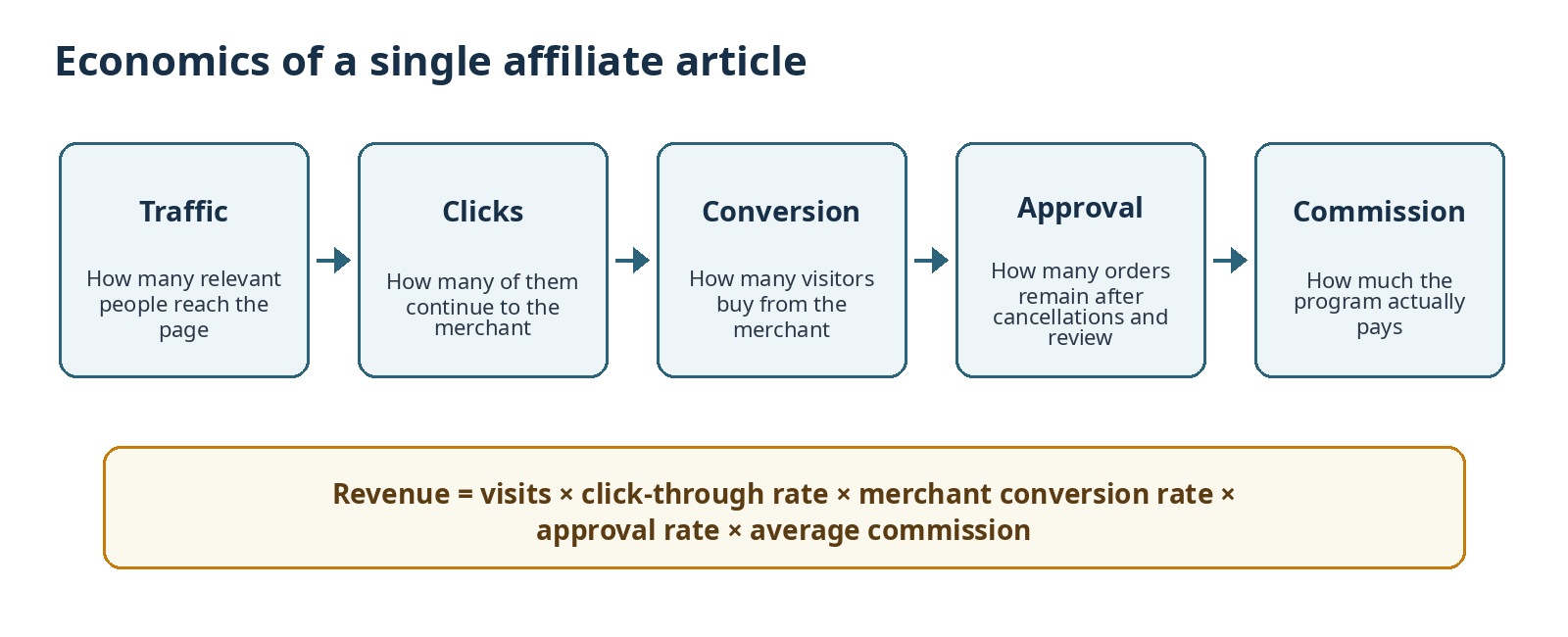
Figure 2: Every article has its own economic chain, and every article can fail at a different point.
| Question when choosing a program | Why it matters | What to record |
|---|---|---|
| How is the conversion attributed? | Determines whether you receive commission across a longer journey or several clicks. | Attribution model, cookie window and cross-device limitations. |
| When is the conversion approved? | A recent report may substantially overstate revenue. | Validation, cancellation period and average approval rate. |
| How often do the terms change? | A commission change can alter the economics of the entire cluster. | Change history, notification method and replacement programs. |
| What data is available? | Without a subID or report, you cannot evaluate the content. | Clicks, orders, approval, product, value and export. |
| Is the offer good for the customer? | A short-term commission is not worth losing trust. | Price, terms, reviews, complaints and genuine benefit. |
6. Where to find affiliate programs in Czechia
You can find programs in affiliate networks, directly from merchants or through partner platforms. A network simplifies access to multiple campaigns and often centralises reporting and payouts. A direct program may offer a closer relationship with the brand, specific terms or stronger support. Neither form is automatically better. The quality of the offer, audience fit, tracking and economics are what matter.
Networks such as Dognet and Affial operate in the Czech and Slovak markets. Heureka and Alza.cz also currently present their own affiliate programs. They are included as verifiable examples of existing options, not as universal recommendations. Campaigns, commissions, attribution windows and terms change. Before publishing a specific recommendation, verify the current program page and record the review in the editorial system.
Do not begin with a list of the highest commissions. Begin with products and services you would recommend even if no commission existed. Then find out whether they have a program. This approach protects audience trust and forces you to choose partnerships according to value, not immediate reward.
Editorial rule
If an article states a specific commission, payout threshold or attribution window, it must include a review date and a link to the official terms. If the figure is unstable or the program does not publish it, the text should explain the criterion without inventing a precise number.
7. Which platform and content architecture to choose
A website is not mandatory, but it is the strongest long-term owned asset if you want to build organic traffic, a knowledge base and an email database. A social network can provide faster reach, but the platform controls the rules and distribution. YouTube is strong when a product needs to be demonstrated. A newsletter is excellent for repeated decisions, but you first need to acquire an audience. The most resilient model combines an owned website with one or two distribution channels that match audience behaviour.
Content architecture should follow the decision journey. A pillar explains the complete topic and provides orientation. A cluster addresses a narrower question, product type, problem or use case. A comparison page helps readers choose between alternatives. A detailed review evaluates a specific product. A guide helps people use the product correctly and can improve both retention and trust. A glossary entry explains a term, although it may not have strong purchase intent on its own.
Every page should have one primary task. An explanatory article should not be overloaded with purchase buttons. A review should not hide disadvantages to increase click-through rate. A comparison should not declare one winner without criteria. Product selection should begin with the user's situation, not the size of the commission. This makes the content useful even when the person does not buy during the first visit.
| Content type | Task | Primary measurement |
|---|---|---|
| Pillar or guide | Explain the topic, provide orientation and connect subtopics. | Question coverage, organic visibility and internal transitions. |
| Comparison | Help readers choose according to specific criteria and situations. | Clicks to merchants, decision quality and approved commission. |
| Review | Show experience, performance, limitations and product suitability. | Conversion, approval, feedback and updates. |
| Guide | Help solve a problem or use the product correctly. | Task completion, return visits and assisted conversions. |
| Alternatives | Retain a user for whom the first choice is unsuitable. | Transitions between options and qualified clicks. |
| Calculator or selection tool | Turn criteria into a personal recommendation. | Tool use, completion, lead or click-through. |
8. What content earns commissions without losing trust
Affiliate content works when it helps the reader avoid a bad choice. A manufacturer can describe features. A partner must explain who will benefit from a feature, who will find it insufficient, what trade-offs it creates and how the product behaves in real use. The greatest value comes from experience that cannot be copied from a catalogue, such as photographs, measurements, a test procedure, long-term use, a complaint or return, comparison with an alternative or precise local context.
A review should state its method. How long did you use the product? Under what conditions? What did you compare it with? Which criteria did you select, and why? What could you not verify? If you have never handled the product, do not pretend that the article is a test. You can create an expert analysis of specifications, terms and available evidence, but you must clearly state the boundary of your own experience.
A good affiliate article can also recommend not buying. If a free solution is sufficient, say so. If a more expensive product is worthwhile only for a narrow group, identify that group. If the merchant has disadvantageous terms, do not omit them. Such content may generate fewer impulsive clicks, but it improves audience quality, approval rates and long-term trust. A publisher who recommends everything is not really recommending anything.
The affiliate relationship should be disclosed clearly before the first commercial link. A short statement might read: "This article contains affiliate links. If you make a purchase through them, we may receive a commission without increasing your price. This does not automatically determine product rankings or ratings." If commission influenced product selection or availability, explain that more precisely. Transparency is not an additional technical obligation. It is part of the recommendation's credibility.
| Weak approach | Stronger approach |
|---|---|
| The best product on the market. | The most suitable option for a person who needs X and accepts Y. The comparison states the criteria. |
| Thousands of people love this product. | We state the specific review source, period and what can and cannot be inferred from the ratings. |
| High quality at a good price. | Quality is divided into measurable parameters, service, warranty and cost of use. |
| Click and buy now. | First verify that you meet the conditions of use and that a cheaper alternative would not satisfy the same need. |
| We tested the product. | We identify the tester, length of use, conditions, measurements, photographs and limitations. |
9. SEO for an affiliate website without shortcuts or link spam
SEO for an affiliate project does not begin with a keyword. It begins with deciding which part of demand you can serve better than the existing results. Search volume is only one signal. Intent, commercial relevance, evidence readiness and the page's fit within the site's topical architecture are also important. One high-quality cluster can be more valuable than one hundred articles created from a keyword export.
Keep the URL stable and build history on it. Updating evergreen content does not justify creating a new address every year. The content, substantive review date and possibly the title change, not the page's basic identity. If the URL must change, it needs a redirect to the closest equivalent, updated internal links, a correct canonical and an indexation check. For an article that has already earned rankings and links, technical continuity is as important as the new text.
Mark affiliate links with the rel="sponsored" attribute. Google recommends it for advertising and paid links. Nofollow remains usable, but sponsored describes the relationship more precisely. Link attributes do not provide transparency to a person, so a visible explanation is also required. Internal links to your own articles, glossary or services should not be mechanically marked as sponsored.
Do not build backlinks through automated packages, directories or paid articles without editorial value. A link should exist because the content provides citable information, a tool, data, a method or an example. Routine assessment of the "toxicity" of every external domain and mass removal requests are not a strategy. First address your own quality, natural recognition and any manual problems supported by specific evidence.
The title and heading should state the page's task precisely. The H1 "Affiliate Marketing for Beginners: How to Get Started in Czechia" is clearer than a promise of prosperity. The meta description should explain what the reader will gain instead of repeating superlatives. The introduction should answer quickly without exhausting the entire article. Headings should form a logical tree of questions. Tables must compare the same unit, and images must have descriptive alt text.
What to preserve when updating evergreen content
The original URL, core search intent, useful internal and external links, historical Search Console data and passages that still answer the question accurately. An update should not mean expanding the text at random. It should remove weaknesses, add new decision information and improve the reader's journey.
10. E-E-A-T, AIO and GEO for affiliate content
Affiliate content concerns money and purchase decisions, so trust is sensitive. E-E-A-T is not a separate score or a block of icons beneath an article. Experience is shown through first-hand use, observation, photography, measurement and details the author knows from practice. Expertise is shown through accuracy, method, comparison and the ability to state limitations. Authority develops through sustained topical coverage and recognition. Trustworthiness connects the author, sources, transparency, freshness, corrections and safety.
The article should have a clear byline and a link to the author's profile. The profile should not be a generic sentence about a passion for marketing. It should explain experience with content, SEO or affiliate strategy, relevant projects, publications and responsibility for review. A product review should also identify the person who performed the test. If a lawyer, accountant or product expert reviewed the article, state the scope of the review rather than placing only a name in a decorative box.
AIO and GEO do not change the basic requirement for human value. Content intended to be used in an AI answer needs clear entities, independently understandable answers, conditions, sources and stable URLs. A definition of affiliate marketing should explain the relationship between the merchant, partner, tracking and commission. A program recommendation should state its criteria and review date. A number should have a source and period. A legal claim should specify the jurisdiction and state the limits of the article.
The most citable content will not be text that repeats definitions from ten websites. It will be an original break-even calculator, an anonymised approval benchmark, a testing method, a comparison taxonomy or a thoroughly documented case. AI systems can summarise generic information without you. A brand must create information that is worth using as a source.
| Layer | What the article should contain | Check |
|---|---|---|
| Experience | An original example, process, test, photograph, mistake or lesson. | Is it clear what the author personally verified and what was only analysed? |
| Expertise | Precise terminology, economics, attribution, limitations and methodology. | Can the text distinguish a click, a recorded conversion and an approved commission? |
| Authoritativeness | Author, profile, topical clusters, citations and external recognition. | Is the author connected to other professional work and an organisation? |
| Trustworthiness | Sources, review date, disclosure, corrections and safe claims. | Does the reader know why the article was created and what commercial relationship it contains? |
| AIO and GEO | Direct answers, entities, evidence, tables, FAQ and stable URLs. | Is every block understandable without being extracted into false certainty? |
11. Legal, ethical and tax considerations in Czechia
An affiliate recommendation has a commercial purpose. Czech consumer protection rules prohibit unfair commercial practices and require material information, including the commercial purpose, not to be omitted or presented unclearly when it is not apparent from the context. The Advertising Regulation Act also defines advertising broadly as a presentation that supports business activity, particularly the consumption or sale of goods and services. The practical consequence is simple: the reader should know clearly and in good time that the author may receive a commission from a purchase.
The word "affiliate" alone may not be clear to everyone. An explanation is therefore better than an abbreviation. The disclosure should be visible, not hidden at the end of the page, in terms and conditions or behind an icon. In video and social media, it must suit the format and the platform's rules. In a comparison or ranking, explain whether the commercial relationship influenced product selection, order or availability.
If you use analytics, remarketing or affiliate cookies, assess their legal status and consent configuration for the specific technology. This is not only about a cookie banner. What matters is what actually loads before consent, what data is sent, to whom, for what purpose and how consent is recorded. Newsletters, profiling and personalisation may create additional obligations. Verify the technical configuration in a browser rather than relying only on a supplier's documentation.
Income from affiliate marketing has tax and accounting consequences that depend on legal form, regularity, place of supply, the partner and other circumstances. This article should not replace individual advice from an accountant or tax adviser. It can, however, alert the reader that commission is income and that contractual relationships, statements, invoicing or self-billing and cross-border supply rules need to be documented.
Recommended disclosure wording
This article may contain affiliate links. If you use them to make a purchase or complete another defined action, DNA marketing® may receive a commission. Your price does not automatically increase. We evaluate products and programs according to the stated criteria and review date. Always verify the current terms directly with the provider.
This chapter is a general marketing and editorial explanation, not legal or tax advice. A specific project requires an assessment of the platforms, contracts, cookies, target countries, product category and communication method involved.
12. KPIs and measurement that reveal the truth
The greatest measurement mistake is tracking only clicks or total commission. A click shows that a link triggered another step. It does not show whether the person bought, whether the merchant approved the order or whether the content generated a profit. Total commission, in turn, does not reveal which content generated it or what that content cost. KPIs must follow the entire chain from relevant traffic to approved revenue and the long-term value of the content.
Use consistent link labelling through a subID or another identifier that distinguishes the page, placement and, where relevant, format. UTM parameters can help with your own analytics, but they should not replace identification in the affiliate system. Web analytics data and network data may not match because they use different rules, time zones, consent states and attribution. The difference should be explained, not forcibly reconciled.
| KPI | Calculation or meaning | Question answered |
|---|---|---|
| CTR to the merchant | Affiliate clicks / relevant page views. | Can the content move a person to the next step? |
| Merchant conversion rate | Recorded conversions / affiliate clicks. | How effectively does traffic become orders in the merchant's environment? |
| Approval rate | Approved conversions / recorded conversions. | What proportion of reported performance is genuinely recognised? |
| EPC | Approved commission / affiliate clicks. | What average value does one click create? |
| Revenue per session | Approved commission / article sessions. | How much does a visit to the specific content earn? |
| Content RPM | Approved commission / page views × 1,000. | How does one thousand views monetise when articles are compared? |
| Content ROI | (Approved commission - costs) / costs. | Did content creation, updating and distribution pay back? |
| Update debt | Number of critical pages past their review deadline. | How much revenue and trust are threatened by outdated information? |
A break-even example shows why high traffic is not enough. If an article costs CZK 15,000, 12 percent of visitors click through to the merchant, the merchant converts 2.5 percent of clicks, 80 percent of orders are approved and the average commission is CZK 450, the expected commission per session is approximately CZK 1.08. To recover CZK 15,000, the article needs approximately 13,900 relevant sessions. Changing the article alone may not help if the problem is the merchant's conversion rate or a low approval rate.
Every piece of content should have its own SMART objective. For example: "Within six months, increase approved monthly commission from the home coffee machine cluster from CZK 7,500 to CZK 13,750 while maintaining an approval rate above 75 percent and without increasing the number of reader complaints." Such an objective connects the result, time, quality and constraint. The objective "increase traffic" does not show whether the traffic belongs to the right audience or creates value.
13. How to use AI responsibly
AI can accelerate question research, topic clustering, interview transcription, consistency checks, identification of outdated information, structural design and the processing of large volumes of first-party data. It should not replace experience, testing or professional responsibility. A model does not know whether you used the product, whether a photograph belongs to the test, whether the program changed its terms or whether commission shown in a report will later be rejected unless you provide verified data.
The highest-risk practice is generating reviews without the product. The text may sound convincing, but it mixes manufacturer materials, third-party reviews and plausible assumptions. Such content pretends to have experience. It is equally problematic to create dozens of pages for every product and keyword combination without independent value. Automation of production is not inherently the problem. Automating emptiness is the problem.
The workflow should separate sources, findings, interpretation and recommendations. AI can prepare a parameter table from provided materials. A person must verify the data and decide which differences matter. AI can suggest questions for a test. An expert must perform the measurements. AI can identify inconsistent claims between an old and a new version. The author or accountable reviewer decides what is published and what is labelled uncertain.
Rule for AI content
No experience, measurement, citation, price, commission, legal conclusion or program property may enter the article unless the editorial team can substantiate it retrospectively. AI may assist with form and analysis, but it must not create evidence.
14. A 90-day plan for your first affiliate project
The first 90 days should not be a competition in article volume. The aim is to verify whether an audience, content advantage, distribution path and viable economics exist. The project should be small in scope but have a complete measurement chain. Five thorough pages with known clicks, conversions and feedback are better than fifty texts without data or an owner.
| Period | Main decision | Output |
|---|---|---|
| Days 1 to 15 | Choose the audience, situation and narrow topic. | Needs map, niche criteria, and a list of programs and risks. |
| Days 16 to 30 | Verify programs, tracking and content architecture. | Registrations, terms, disclosure, subID rules, pillar and clusters. |
| Days 31 to 50 | Create the first evidence-based content. | Pillar, guide, comparison, review or proprietary tool. |
| Days 51 to 65 | Launch distribution and obtain the first audience behaviour signals. | Internal links, Search Console, newsletter or social channel. |
| Days 66 to 80 | Evaluate the complete chain. | CTR, clicks, conversions, approval rate, questions and technical errors. |
| Days 81 to 90 | Decide whether to scale, change or stop. | Prioritised plan for further content, updates and replacement programs. |
The project does not have to be profitable after 90 days. It must, however, produce decision data. If relevant traffic is not arriving, the problem may be distribution or the topic. If people read but do not click, the content may not create a bridge to purchase. If they click but do not convert, the problem may be the offer or traffic quality. If conversions occur but are not approved, review the promises, audience and program. Each problem requires a different correction.
15. The most common mistakes
The first mistake is choosing a topic according to commission. The partner then creates content for a product they do not understand and must pretend to be certain. The second is confusing publication with strategy. An article calendar cannot fix a weak offer, the wrong audience or missing evidence. The third is evaluating performance from clicks without approved conversions. The fourth is building the entire project on one campaign. The fifth is hiding the affiliate relationship in the belief that transparency will reduce sales.
Another common mistake is rewriting manufacturer descriptions. Such content has no informational advantage and is easy to replace. Product recommendations without criteria, rankings without a method and reviews without disadvantages are equally weak. Another mistake is leaving an old article without review. Products change, programs end, and prices and terms become outdated. Evergreen does not mean unchanging text. It means a stable need that the editorial team regularly addresses according to current reality.
A technical mistake is changing the URL of a successful article without a reason, breaking internal links, using an inconsistent canonical or redirecting to a generic page. Content and technical errors often compound one another. Even an excellent update loses value if the original address stops returning relevant content.
Frequently asked questions about affiliate marketing
Can you earn money from affiliate marketing without your own website?
Yes. A partner can work through video, social networks, a newsletter or a community. An owned website, however, provides better control over content, search, data and long-term value. The most resilient model connects an owned asset with a distribution channel.
Is affiliate marketing passive income?
It can generate returns from older content, but active work and regular maintenance come first. Content needs to be tested, updated, measured and adapted to changes in products and programs.
How much money do I need to get started?
It depends on the platform, topic and evidence requirements. Costs may include a domain, hosting, products for testing, expert review, analytics, video or distribution. The break-even point of a specific piece of content matters more than a universal budget.
How do I choose a good affiliate niche?
Look for the intersection of a real audience need, your own credibility, available programs, reasonable economics and distribution. Validate the topic through a small content experiment, not only through a keyword tool.
What is the difference between an affiliate network and a merchant's own program?
A network groups several campaigns and centralises technology and payouts. A merchant operates its own program directly. Terms, tracking, support and offer suitability matter more than the program type itself.
Do I need to disclose affiliate links?
The commercial relationship should be clear and visible to the reader. From Google's perspective, the link should use rel="sponsored". The specific legal and platform requirements must be assessed according to the format, technology and market.
What is EPC?
EPC is the approved commission attributable to one affiliate click. It helps compare programs and placements, but it should be assessed together with audience quality, approval rate and costs.
Can I use AI to write affiliate articles?
AI can help with research, structure and review. It must not invent testing, experience, prices, terms or citations. The final text needs an author, sources and accountability for its claims.
How often should an affiliate article be updated?
According to risk and the pace of change. Program terms and prices should be checked more often than stable definitions. Every priority page should have a review date, an owner and a trigger, such as a product, commission or legal change, or a decline in performance.
What should I do if a program reduces its commission or closes?
Recalculate the economics, update the links and text, offer a relevant alternative and check whether the original recommendation remains true. Over the long term, build relationships with several programs and develop your own audience so that one partner does not determine the entire project's outcome.
Does high traffic guarantee income?
No. Revenue depends on traffic relevance, click-through rate, merchant conversion, approval and commission. A narrow article with strong purchase intent can earn more than a general article with several times the traffic.
How do I know an article needs to be revised?
Monitor declines in relevant impressions, CTR, internal transitions, EPC, approval and question quality. A product, program, legal, technology or competitive change can also trigger a review. Do not change the date without a substantive update.
Conclusion: affiliate marketing rewards decision value
Affiliate marketing is not income for inserting a link. It is a reward for connecting the right audience with the right offer at the right time while preserving trust. A partner who understands only SEO may attract traffic without conversions. A partner who understands only sales may increase clicks in the short term and destroy credibility over the long term. A sustainable project combines content, distribution, product understanding, transparency, tracking and economics.
Start narrowly. Choose a topic where you can provide original evidence. Verify programs and their rules. Create several pieces of content with clear tasks. Measure the entire chain through to approved commission. Update what works and remove what generates traffic without value. An affiliate project does not become an asset merely because it has many pages. It becomes an asset when every important page helps people make decisions and the editorial team knows how to demonstrate that help.
About the author and the update methodology
Miroslav Schmiedt is a marketing strategist, co-founder of DNA marketing®, author of the book Tajomstvá ultimátnej stratégie and Vice President for AI Education at the Slovak AI Alliance. His long-term work covers marketing strategy, SEO, AIO, GEO, content architecture, analytics and the introduction of AI into marketing processes. The article was updated by comparing the original 2024 version with current search results, official Google guidance, Czech legislation and currently available affiliate program pages.
The article does not contain guaranteed earning figures or universal commission rates. Program examples were verified on 2 August 2026. Terms may change. The legal and tax section is informational and does not replace an individual assessment.
Professional and primary sources used
1. Google Search Central: Creating helpful, reliable, people-first content: open the official source
2. Google Search Central: Qualify outbound links for Google: open the official source
3. Google Search Central: Write high quality reviews: open the official source
4. Google Search Central: Guidance about AI-generated content: open the official source
5. Google Search Central: Resource for optimising for generative AI in Search: open the official source
6. e-Sbírka: Act No. 40/1995 Coll., on the Regulation of Advertising: open the official source
7. e-Sbírka: Act No. 634/1992 Coll., on Consumer Protection: open the official source
8. Dognet: how to become an affiliate partner: open the official source
9. Affial: official network website: open the official source
10. Heureka Group: Affiliate program: open the official source
11. Alza.cz: Affiliate program: open the official source
12. Google Search Central: managing multilingual and multi-regional sites: open the official source